|
This was the Social Scientific question of the month for my Marital and Sexual Lifestyles class.
Here is my submitted response, I thought this would make a great Blog addition to a pre-health site so feel free to comment on this everyone. The 'striking' conclusion after numerous studies of human societies worldwide and animal behavior is "every human society regulates the sexual behavior of its members" (Linda Rouse, pg. 9). The term 'striking' was most appropriate since human sexuality has always been generalized as the product of an individual's experiences and also as their identity. In other cases human sexuality has been concluded as being instinctive or as a biological intuition (an ability predetermined by genes). However, we now learn that specific norms and values govern sexual behavior and "it is in our interactions with others that we learn sexual behavior and our feelings about sex" (Rouse, pg. 9). Anthropologists such as Clellan Ford, Frank Beach, and Ian Robertson provide enlightening insight about human sexuality worldwide. Robertson's extensive cross-cultural analysis shows how the "interplay between biological potentials and cultural norms produce extraordinarily diverse kinds of sexual conducts" (Rouse, pg.11). Robertson noted the variance in sexual conduct from several cultures around the world, each culture having a different sexual norm than the other. Showing clearly that human sexuality cannot be studied and understood with the least degree of ethnocentrism as "sexual behavior is learned through socialization and [conformity] to the prevailing norms in a given society" (Rouse, pg. 9). Ford and Beach published a report in 1951 showing not only how culture mediates sexuality, but also how "sexuality is patterned by learning" with the human brain playing a pivotal role (Rouse, pg. 10). Psychologist Harry Harlow hypothesized that if behaviors such as mating or rearing offspring were instinctive then an animal in isolation should exhibit all of these habits without having to have learned or observed them. Harlow experimented on rhesus monkeys and his results showed otherwise. The male monkeys reared in isolation lack effective copulation abilities and females raised in isolation (and later had offspring) did not show 'normal' mothering behaviors. Linda Rouse states that Harlow's experimental results give good grounds for skepticism about the notion of human sexuality being completely biological. And I concur. From an evolutionary perspective it can be inferred that the same would apply to humans reared in isolation since all primates (humans, monkeys, apes, etc.) share a distant common evolutionary ancestor. Research conducted by behavioral ecologist also confirms a great deal of synapomorphies (shared derived traits) between all primates. Hence, Harlow's results provide strong supporting implications on human sexuality as a learned and society influence trait than a purely instinctive ability. Any thoughts? References: Rouse, L. (2002). Marital and Sexual Lifestyles in the United States: Attitudes, Behaviors, and Relationships in Social Context. Arlington, TX: Haworth Clinical Practice Press, 2002
8 Comments
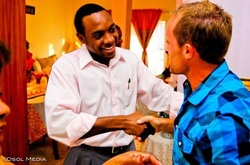 On behalf of the Eliel Arrey Team, I would like to welcome all the returning students and tutors to another great academic year. This year we plan on adding more classes and more material to support your science needs more than we ever have. Over the summer we were able to expand our service parameters to more classes and adopt new technology to better our delivery. More professors have recognized our efforts and are recommending us to more students. We are very pleased to be able to do such non-profit work. Our joy is great and our satisfaction is full, but there is still much more work to be done on our part.
Currently we are expanding our servers to support the volume, hence at this time new students are unable to subscribe to receive our free elite member services (more practice tests, mp3s, videos, etc). However, it is projected that by September 20th, our servers will be all up and running for new member sign ups. We are expecting over 1000 new members between September 20 and November 2nd. Please be patient with us and we do apologize for this delay. Thank you for using our services. Yours, E. Arrey President Questions requested by students for further review of material on S.I. practice exam. Question# 10 on (mini exam 40,41) 10) A mouse uses ______ energy per kilogram of body weight compared to an elephant, therefore in smaller animals the rate of energy use per cell is _______ than that in larger animals. A)less, more B) less, greater C) less, less D) more, less E) more, greater the correct answer is E. smaller organisms use more energy per kilogram of body weight unlike larger organisms. Hence, smaller organisms use greater energy per individual cell than larger organisms. Reasons being because they have less cells to perform the same metabolic duties a larger organism performs. For example, not all your cells are directly involved in digestion. Right? You have specialized organs (ex stomach, liver, etc) that perform that action. A smaller or single celled organism has just one cell (or a few) that perform all their actions (reproduction, digestion, etc) so the cellular metabolic energy usage and production will be higher than that of a larger organism. Hope that works, let me know if I can help some more. Question # 27 (from S.I. Exam review) 27) Ventricular tachycardia (v tach) is a dangerous condition of elevated heart rate, about 200 beats per minute. Which of the following best explains why v tach is such a deathly condition if normal rhythm is not quickly restored? A) The heart fills with blood during systole, so faster heart beat means less time there is for blood to enter the heart. A faster heart beat means diminishing returns in terms of amount of blood supplied to the body. B) Damage to the SA node comes with aging, hence the v tach condition can only be found in the older population. C) During period of rest or exercise the autonomic nervous system controls heart rate. Hence a v tach syndrome is due to a nervous disorder. D) The v tach condition is evidence of cardiac input disorder. E) The heart fills with blood during diastole, so faster heart beat means less time there is for blood to enter the heart. A heart with v tach cannot properly fill with blood and paradoxically stops pumping blood. the correct answer is E. Why is A not correct? Faster heart beat means diminishing returns in terms of blood....that is all correct, except that blood does not enter the heart during systole. Question # 35 from S.I. Exam 2 review 35) A sphygmomanometers measure the gauge pressure in the systemic circulation, which is the pressure above atmospheric pressure (760 mmHg at sea level). At what component of the circulatory circuit would one expect to detect the largest drop in blood pressure? A) Arteries B) Veins C) Venules D) Capillaries E) Arterioles The correct answer is E. If you can recall blood pressure is highest in arteries right. And it is lowest in the capillaries. Hence that high blood pressure leaving the aorta undergoes its largest drop when it reaches the arterioles, so that by the time it gets to the capillaries, its blood pressure is lowest, allowing for exchange of substances. Thanks Questions # 26 - 32 (from S.I. practice exam) The mechanism of Antimicrobial burst. Usually, since an antimicrobial burst is an innate ability, it is triggered in anticipation of infection. When the epithelial cells of the skin are damaged during a sporting event by bruises, or something of that nature. It's triggered similar to how the blood clot mechanism works. Usually spontaneous when blood pressure seems to drop around a particular superficial vein/vessel. Hope this helped. Questions #8, 22, 39 & 43 from S.I. exam 2 review 8. which of the following have influence on metabolic rate. E. all of the above 22. HIV pt. w/o T-lymphocytes, would be most susceptible to A. Viral infections or B. to bacterial infections? I remember Pneumonia and TB (viral and bacterial)? A, viral infections. T-cells are vital for protection against viral infections, while B cells which are much larger and cannot cross the cell membrane generally fight bacterial infections. 39. osmotic pressure on venous side of capillary beds drops below hydrostatic pressure- C. the pH of the interstitial fluids increase???? B, fluids will tend to accumulate. Osmotic pressure higher than hydrostatic pressure on the venous side is what allows for substances to diffuse across blood plasma into interstitial fluids. Whenever osmotic pressure drops lower than hydrostatic pressure at the venous end of capillary beds, fluids don't diffuse enough across and tends to coagulate blood returning to the heart. Clinically diagnosed as pulmonary thromboembolism. 43. Compared with the interstitial fluid that bathes active muscle cells, blood reaching these cells in arteries has a B. higher PCO2? A, higher PO2 (partial pressure of oxygen). Muscles part of systemic system, so arteries taken blood to these muscles has a higher partial pressure of oxygen versus Carbon dioxide. The great Dr. Frederick once gave me the best recipe to master Anatomy and Physiology. She didn't provide me with an easy route, but with a guaranteed success route...one that was very difficult and required a great deal of self discipline. Recently Dr. Frederick made a perfect combination of all the techniques that were once told by word of mouth from student to student. Now she shares with college students, HOW to Study for Anatomy & Physiology. (click on 'Read More" below)  The Extra Mile to Mastering A&P in 3 days. Trust ME! Finally, in succeeding as a Biology student, one needs to know how to approach a biology exam and also how to control the feelings that follow failure. Dr. Frederick, PhD., breaks down how to approach exams and how to stay motivated even when failures arise. Dr. Frederick has always told her students that "Your grade is a number, but you are not. The exams are usually difficult but they are not a test of your intelligence." Be sure to take some notes as we deliver this last volume of "How to Succeed In Biology" Enjoy. Preparing For Exams.
A continuation of How to Succeed in biology. Excerpts from college Biology professor, Dr. Frederick, PhD. Part 2 of 3 contains How to Study. An overview of the Do's and Don'ts when mastering Biology. Enjoy. How To Study More Effectively.
This was lectured to me by Professor, Dr Frederick when I was a freshman in college. She laid the ground work for my success as she taught us Biology (the course) and How to Succeed In Biology (the Degree). I was quite inspired as always and I felt the need to share this with all students who may be seeking the same guidance that I once sought. With Dr. Frederick's permission, I have posted this online into series of success tips for students all around. Enjoy, take lots of good notes. Help! I’m Smart and I’m Failing Biology! (part 1 of 3)
Interview with Dr. Lee Ann Frederick: How to Master College Biology and Do Something With It.3/1/2011 This week I had the special privilege of sitting down with Dr. Lee Ann Frederick, PhD, Biology professor at the University of Arlington Texas. We discussed many problems and challenges that college students face: from embracing biology to doing something with a biology degree. Dr. Frederick opens up and shares insider secrets on how to study biological sciences, how to get a letter of recommendation from any professor, how to choose a post undergraduate program, and much more. You can't miss this. I was very inspired and took lots of notes! So take lots of good notes as you listen too. :) Enjoy! Why Dr. Frederick? Dr. Frederick has a tremendous life story. One of trials, perseverance, and success. She has made it to where she is today because she endured and never gave up. She knows exactly what most students are going through now in their college life and has great advices that apply to the masses. She shares with us some things you can't afford not to know, such as how to get a letter of recommendation, how to master biology, and a simple trick on how to Ace it! I will recommend her to any student who is planning on taking College (Freshman) biology or Anatomy & Physiology (A&P). She is a great teacher. Subscribe to our Blog to stay in touch with our "Get More out of College" News. Coming soon -- Learning Organic chemistry is difficult. It is a science course that demands a higher level of reasoning. A special guest, PhD, shares with us 'How to learn Organic Chemistry'. Stay tuned. Drop Us any comments/feedback. Thanks
Hello
So we have gotten some pretty good responses about how these site was able to help students for this first test. Dr. Bernard and I had a great hallway conversation and he has challenged me to see if there would be an increase in the class percentage and hopefully everyone would get an "A" in this class. There were some slight misgivings about if this website was going to make the exams harder or if it was going to make Dr. Bernard change his exams this semester. Well the answer is simple. Maybe, or maybe not. It's irrelevant. The purpose of all the simple reviews, mp3's, and practice tests that are on this site are available to strengthen out understanding of the course and it's content. It was not for, and never will be, the blueprint of ANY EXAM for this class this semester. If a student denies the responsibility of individual study of the material and relies on these exams alone, that is a personal choice...a poor one if I might add. So, all my team and I need is some feedback on how we could make the human physiology section of this website better so we are all geared up for the next exam! And please if any student has tools or mnemonics or videos that they use to study for the class and it helped get a higher score, please feel free to share...if you want to. We love sharing, :) Feel free to contact me with any review slides, notes, summaries, ideas, that you think needs/should be on here and we will get it done. So please, let us know how we can do better.... Thanks El Arrey |
Eliel Arrey
Official blog of Eliel Arrey Archives
April 2024
Categories
All

|
 RSS Feed